Showing posts with label Written by Claude. Show all posts

Oct 21, 2025

The Rise of AI-Powered Business Analytics: How Companies Are Gaining Competitive Edge in 2025

Artificial intelligence has moved from buzzword to business necessity. In 2025, companies that leverage AI-powered analytics are outpacing competitors by making faster, more informed decisions based on real-time data insights. This transformation isn't limited to tech giants—small and medium-sized businesses are also harnessing AI tools to optimize operations, predict market trends, and enhance customer experiences.

The global business analytics market is experiencing unprecedented growth, with AI integration becoming the defining factor separating industry leaders from followers. Understanding how to implement these technologies effectively can determine whether your business thrives or merely survives in today's rapidly evolving marketplace.
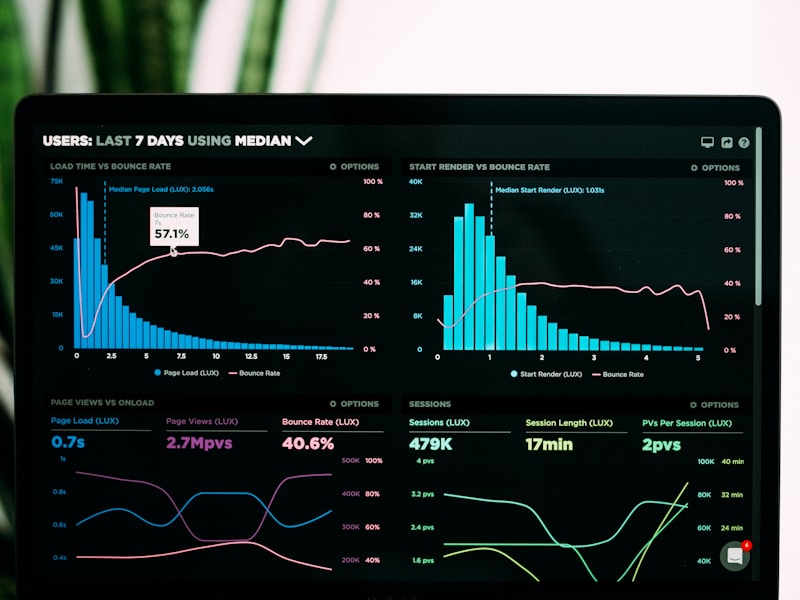
Business analytics dashboard displaying data visualizations and charts

What Is AI-Powered Business Analytics?

AI-powered business analytics combines traditional data analysis with machine learning algorithms, natural language processing, and predictive modeling. Unlike conventional analytics that simply report what happened, AI systems can predict what will happen and recommend actions to achieve desired outcomes.

These systems process massive datasets at speeds impossible for human analysts, identifying patterns, correlations, and anomalies that might otherwise go unnoticed. According to business analytics research, companies using AI-driven insights report up to 30% improvement in decision-making speed and accuracy.

The technology encompasses several key capabilities including automated data collection, real-time processing, predictive forecasting, prescriptive recommendations, and natural language interfaces that allow non-technical users to query complex datasets using simple questions.

Key Benefits Driving Business Adoption

Enhanced Decision-Making Speed

Traditional business intelligence often requires weeks of data compilation and analysis. AI-powered systems deliver actionable insights in real-time, allowing executives to respond immediately to market changes, customer behavior shifts, or operational issues. This speed advantage can mean the difference between capitalizing on opportunities and missing them entirely.

Predictive Accuracy for Market Trends

AI algorithms analyze historical data, current market conditions, economic indicators, and even social media sentiment to forecast future trends with remarkable accuracy. Retailers use these predictions for inventory management, financial institutions for risk assessment, and manufacturers for demand planning.

Cost Reduction Through Automation

By automating data collection, cleaning, and preliminary analysis, companies reduce the need for large analytics teams while eliminating human error. Resources previously spent on manual reporting can be redirected toward strategic initiatives and innovation.
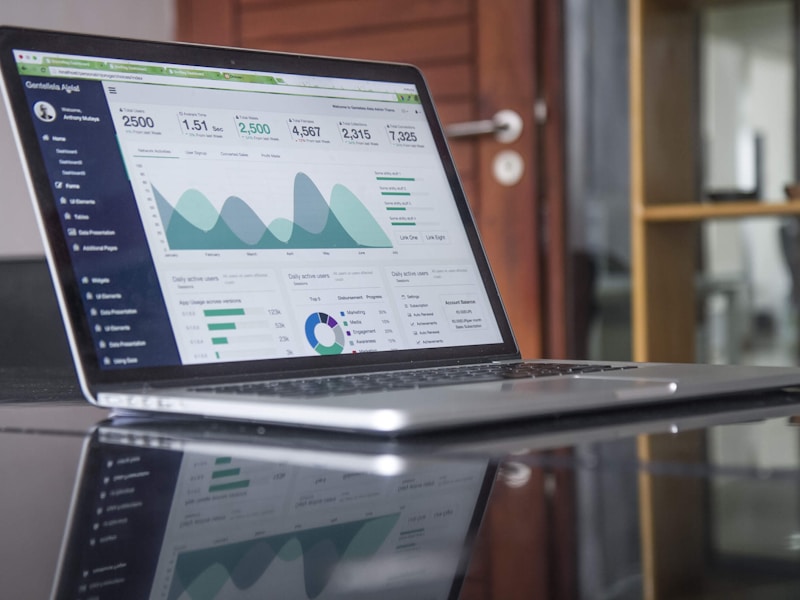
Professional working with financial data and technology

Personalized Customer Experiences

AI analytics enable businesses to understand individual customer preferences, purchase patterns, and behavior triggers. This granular insight allows for hyper-personalized marketing, product recommendations, and service delivery that significantly improve customer satisfaction and lifetime value.

Industries Leading the AI Analytics Revolution

While AI analytics benefits virtually every sector, certain industries have emerged as early adopters with measurable success:

  • Financial Services: Banks and investment firms use AI for fraud detection, credit risk assessment, algorithmic trading, and personalized financial advice
  • Retail and E-commerce: Dynamic pricing, inventory optimization, customer segmentation, and demand forecasting drive profitability
  • Healthcare: Predictive analytics improve patient outcomes, operational efficiency, and resource allocation across healthcare systems
  • Manufacturing: Predictive maintenance, quality control, supply chain optimization, and production planning reduce costs and downtime
  • Marketing and Advertising: Campaign optimization, audience targeting, content performance analysis, and ROI measurement maximize marketing effectiveness

Comparing Top AI Analytics Platforms

Several platforms dominate the AI-powered analytics market, each with distinct strengths and ideal use cases. Understanding these differences helps businesses select the right solution for their specific needs.

Enterprise Solutions

Pros: These platforms offer comprehensive features, robust security, scalability for large organizations, extensive integration capabilities, and dedicated support teams. They handle complex data environments and provide enterprise-grade reliability.

Cons: High implementation costs, lengthy deployment timelines, steep learning curves, and often require dedicated IT resources for maintenance and optimization.

Best for: Large corporations with substantial budgets, complex data infrastructures, and dedicated analytics teams.

Mid-Market Solutions

Pros: Balanced cost-to-feature ratio, faster implementation, user-friendly interfaces, adequate scalability for growing businesses, and reasonable pricing models that include regular updates.

Cons: May lack some advanced features of enterprise platforms, limited customization options, and potential scaling challenges as organizations grow significantly.

Best for: Medium-sized businesses seeking powerful analytics without enterprise-level investment or complexity.

Small Business and Startup Solutions

Pros: Affordable pricing, quick setup, intuitive interfaces requiring minimal training, cloud-based accessibility, and flexible subscription models that scale with business growth.

Cons: Limited advanced features, potential data volume restrictions, fewer integration options, and may require platform migration as business needs become more sophisticated.

Best for: Small businesses, startups, and entrepreneurs needing immediate insights without significant upfront investment.

Business team analyzing data and strategy

Implementation Strategies for Success

Successfully implementing AI-powered analytics requires more than purchasing software. Organizations must approach adoption strategically to maximize return on investment.

Start with clearly defined business objectives. Identify specific problems you want to solve or opportunities you want to capture. Whether improving customer retention, optimizing supply chains, or predicting market trends, concrete goals guide platform selection and implementation priorities.

Data quality determines analytics quality. Before implementing AI systems, audit your data sources, establish data governance policies, and invest in data cleaning and preparation. Even the most sophisticated AI cannot generate reliable insights from poor-quality data.

According to Forbes business analysis, companies that prioritize data infrastructure before AI implementation achieve measurable results 60% faster than those that don't.

Build cross-functional teams that include IT professionals, data scientists, business analysts, and department leaders. AI analytics affects entire organizations, and successful adoption requires buy-in and collaboration across all levels.

Overcoming Common Implementation Challenges

Despite clear benefits, many organizations struggle with AI analytics adoption. Understanding common pitfalls helps businesses avoid costly mistakes.

  • Data Silos: Information trapped in disconnected systems limits AI effectiveness. Breaking down silos through integration and unified data platforms is essential
  • Skill Gaps: Many organizations lack personnel trained in AI analytics. Investing in training programs or partnering with consultants bridges this gap
  • Resistance to Change: Employees may fear AI replacing their roles. Transparent communication about how AI augments rather than replaces human expertise eases transitions
  • Unrealistic Expectations: AI isn't magic. Setting realistic timelines for implementation and results prevents disappointment and premature abandonment
  • Security Concerns: AI systems require access to sensitive data. Implementing robust security protocols and compliance measures protects business and customer information

The Future of AI-Powered Analytics

The AI analytics landscape continues evolving rapidly. Emerging trends indicate where the technology is headed and how businesses should prepare.

Conversational AI interfaces are making analytics accessible to non-technical users. Instead of learning complex query languages, employees can ask questions in plain English and receive instant visualized answers. This democratization of data empowers every department to make data-driven decisions.

Edge analytics—processing data closer to its source rather than in centralized clouds—enables real-time insights for IoT devices, retail locations, and manufacturing facilities. This approach reduces latency and bandwidth costs while improving response times.

Automated machine learning (AutoML) is simplifying model creation and optimization. Businesses no longer need specialized data scientists to build effective predictive models, lowering barriers to AI adoption.

Conclusion: Embracing the Analytics Revolution

AI-powered business analytics represents a fundamental shift in how companies operate, compete, and grow. Organizations that embrace these technologies gain significant advantages in decision-making speed, predictive accuracy, operational efficiency, and customer satisfaction.

The barrier to entry continues lowering as platforms become more accessible and affordable. Whether you're running a startup or managing an enterprise, AI analytics tools exist that fit your needs and budget. The question is no longer whether to adopt AI-powered analytics, but how quickly you can implement them effectively.

Success requires strategic planning, quality data infrastructure, organizational alignment, and realistic expectations. Companies that approach AI analytics as a transformative journey rather than a one-time technology purchase will reap the greatest rewards.

The competitive landscape of 2025 and beyond belongs to data-driven organizations. By investing in AI-powered analytics today, you're not just keeping pace with competitors—you're positioning your business to lead your industry into the future.

Is your business ready to harness the power of AI analytics? The tools are available, the benefits are proven, and the time to act is now.



Share/Bookmark

Oct 13, 2025

The Gig Economy Revolution: How Freelancing Is Reshaping Business and What It Means for Your Career

Modern freelancer working remotely representing the gig economy transformation

Five years ago, I made what seemed like a risky decision: I left my stable corporate job to become a freelance consultant. Friends and family thought I was crazy. "What about benefits?" they asked. "What about job security?" But here's what I discovered—the traditional employment model they were defending was already crumbling, and the gig economy wasn't just a trend, it was a fundamental restructuring of how work happens.

Today, over 36% of U.S. workers participate in the gig economy in some capacity, and that number continues climbing. But this isn't just about Uber drivers and DoorDash deliveries. The gig economy encompasses freelance professionals, independent consultants, contract workers, and side hustlers across virtually every industry. Understanding this transformation isn't optional anymore—it's essential for anyone navigating the modern economy, whether you're a business owner, employee, or entrepreneur.

What's Really Driving the Gig Economy Boom

The gig economy didn't appear overnight, and it's not just about technology platforms, though they've certainly accelerated the trend. Several powerful forces are converging to reshape how we work:

Technology Infrastructure: High-speed internet, collaboration tools, cloud computing, and mobile technology make remote work seamless. I can deliver consulting services to clients across three continents from my home office with the same efficiency as if I were in their building. This wasn't possible even a decade ago.

Economic Uncertainty: After witnessing corporate layoffs, pension eliminations, and the erosion of traditional job security, many workers question whether "stable" employment really exists. If loyalty isn't rewarded with security, why not prioritize flexibility and higher earning potential?

Shifting Values: Younger generations increasingly prioritize autonomy, flexibility, and work-life integration over climbing corporate ladders. The ability to control your schedule, choose your projects, and work from anywhere holds more appeal than corner offices and company cars ever did.

Corporate Cost Pressures: From the business perspective, hiring independent contractors reduces overhead costs—no benefits, office space, or long-term commitments. Companies can scale their workforce up or down based on actual needs rather than maintaining expensive full-time staff for fluctuating demand.

According to economic research on the gig economy, these factors have created a perfect storm accelerating this transformation across developed economies worldwide.

The Financial Reality: What Gig Work Actually Pays

Financial planning and business analysis for gig economy workers

Let's talk honestly about money, because that's where myths about gig work meet reality. The financial picture is more complex than either cheerleaders or critics typically admit.

In my first year of freelancing, I earned about 20% less than my corporate salary. But here's the nuance: I also worked fewer hours, had no commute, and could deduct business expenses. By year two, I was earning 50% more than my old salary, working similar hours with far greater flexibility. By year three, I'd doubled my corporate income.

This trajectory isn't unusual for skilled professionals, but it's also not universal. Success depends heavily on your field, skills, network, business acumen, and discipline. Here's what I've observed across different gig economy segments:

High-Skilled Professional Services: Consultants, designers, developers, writers, and other specialized professionals often earn significantly more than salaried equivalents once established. The trade-off is inconsistent income, self-funded benefits, and constant business development.

Skilled Trades and Services: Plumbers, electricians, photographers, and similar tradespeople can command premium rates and build sustainable businesses. Strong local networks and reputation management are crucial.

Platform-Based Gig Work: Rideshare drivers, delivery workers, and task-based services typically earn less per hour after expenses, though flexibility remains the primary benefit. These often work better as supplemental income rather than primary earnings.

The key insight I've learned: treating gig work like a business rather than just a job dramatically improves outcomes. Those who invest in marketing, client relationships, and skill development thrive. Those who approach it casually often struggle.

Comparing Employment Models: Traditional vs. Gig Economy

After experiencing both worlds, here's my honest assessment of the trade-offs:

Traditional Employment:

  • Pros: Predictable income; employer-sponsored benefits (health insurance, retirement contributions); paid time off; simpler taxes; social connections; clear career progression paths; unemployment eligibility
  • Cons: Limited income ceiling; less schedule flexibility; office politics; commuting costs and time; vulnerability to layoffs; restricted autonomy in how work gets done
  • Best For: People who value stability and predictability; those with expensive health needs; early career professionals building skills; anyone uncomfortable with income variability

Gig Economy Work:

  • Pros: Unlimited income potential; complete schedule control; choose your clients and projects; work from anywhere; diversified income sources reduce certain risks; tax deductions for business expenses; no office politics
  • Cons: Income volatility; self-funded benefits; constant client acquisition; irregular hours; isolation; complex taxes; no paid time off; inconsistent workflow; requires self-discipline and business skills
  • Best For: Self-motivated professionals; those with marketable specialized skills; people who value autonomy over stability; individuals with partner's benefits; disciplined financial planners

My Honest Take: Neither model is inherently superior—they suit different life stages, personalities, and circumstances. I've thrived in gig work, but I've also seen talented people struggle because they underestimated the business management demands. The hybrid approach—maintaining part-time employment while building freelance income—often provides the best transition strategy. Test gig work before committing fully. And remember: you're not locked into one path forever. Many people move between models throughout their careers based on changing priorities and circumstances.

The Hidden Challenges Nobody Talks About

The gig economy marketing emphasizes freedom and flexibility, which are real benefits. But there are genuine challenges that catch people off-guard:

The Feast-or-Famine Cycle: Income irregularity isn't just about lower months—it's about the psychological stress of uncertainty. I've had months where I earned more in four weeks than I used to make quarterly, followed by slow periods that tested my nerves. Building a substantial financial buffer is essential, not optional.

Isolation and Loneliness: Working independently means missing the social aspects of traditional workplaces. The casual hallway conversations, team lunches, and camaraderie that happen naturally in offices require intentional effort to replace. I had to deliberately build a professional community through coworking spaces and networking groups.

Always-On Mentality: When your income depends on securing the next project, it's hard to truly disconnect. I struggled with checking emails constantly and feeling guilty about taking breaks. Learning to set boundaries and maintain work-life separation took intentional practice.

Benefits Are Expensive: Health insurance, retirement savings, and other benefits employers typically subsidize come entirely from your pocket. These costs often surprise new freelancers who calculated their rates based only on replacing salary without accounting for benefits.

Constant Self-Promotion: Marketing yourself never stops. Even when busy with current projects, you need to maintain visibility and relationships for future work. This ongoing business development feels exhausting for people who just want to focus on their craft.

How Businesses Can Leverage the Gig Economy Effectively

Business team collaboration and strategic planning in modern economy

From the business perspective, the gig economy offers tremendous opportunities, but only if approached strategically. Having worked both as a freelancer and with companies hiring freelancers, I've seen what works and what doesn't.

Strategic Workforce Planning: The best companies thoughtfully determine which roles require full-time employees versus which can be effectively filled by contractors. Core competencies and roles requiring deep institutional knowledge typically warrant full-time staff. Specialized projects, seasonal demand, and supplemental capacity work well with gig workers.

Building Contractor Networks: Rather than constantly sourcing new freelancers, successful companies develop relationships with reliable contractors who understand their business and culture. These ongoing relationships provide flexibility without sacrificing quality or continuity.

Fair Compensation and Treatment: Companies that treat contractors professionally—paying fairly, respecting their time, providing clear expectations, and honoring agreements—build reputations that attract top talent. Those who exploit contractors or treat them as inferior to employees struggle to access quality professionals.

Legal Compliance: Misclassifying employees as contractors to avoid benefits and taxes creates serious legal liability. Understanding the legal distinctions and complying with regulations protects your business from costly mistakes.

Integration Challenges: Successfully integrating contractors with full-time staff requires thoughtful management. Clear communication, appropriate tool access, and inclusion in relevant meetings while respecting contractors' independence creates productive collaboration.

For more context on labor economics and employment trends, this resource on labor economics provides comprehensive background on workforce dynamics.

Preparing for the Future: Strategies for Success

Whether you're considering gig work, already freelancing, or managing a business in this evolving landscape, certain strategies increase your chances of success:

Build Diverse Skills: The most successful gig workers aren't just technically proficient—they also develop business, marketing, and financial management skills. Being excellent at your craft isn't enough; you need to run a business.

Create Multiple Income Streams: Relying on a single client or platform is risky. Diversifying across multiple clients, services, or income sources provides stability despite individual relationship changes.

Invest in Your Network: Your professional network becomes your most valuable asset in gig work. Maintain relationships, provide value to others, and stay visible within your professional community. Most of my best opportunities have come through referrals, not cold outreach.

Master Financial Management: Understanding cash flow, setting aside taxes, planning for irregular income, and investing for retirement without employer contributions requires financial discipline. Consider working with an accountant who understands gig economy challenges.

Maintain Professional Development: Without employers providing training, continuous learning becomes your responsibility. Invest in skill development, stay current with industry trends, and adapt to changing market demands.

Conclusion: Navigating the New Normal

The gig economy isn't a temporary trend or a niche phenomenon—it's a fundamental transformation of how work gets done. Traditional employment isn't disappearing, but it's no longer the only viable path for either workers or businesses.

My journey from corporate employee to successful freelancer wasn't always smooth, but it's been incredibly rewarding. The flexibility to design my work around my life rather than vice versa, the ability to choose projects that align with my values, and the unlimited income potential have far exceeded what traditional employment offered me.

But I also recognize this path isn't for everyone, and that's okay. The key is making informed choices based on honest assessment of your skills, personality, financial situation, and priorities rather than myths about either traditional employment security or gig economy freedom.

For businesses, the gig economy offers unprecedented flexibility and access to specialized talent. Companies that thoughtfully integrate gig workers while treating them fairly will thrive. Those clinging to traditional models or exploiting contractors will struggle.

The future of work is here, and it's more varied, flexible, and opportunity-rich than the industrial-era employment model it's replacing. Whether you're an employee considering freelancing, a freelancer building your business, or a company adapting to workforce changes, success comes from understanding this transformation and positioning yourself strategically within it.

The question isn't whether the gig economy will continue growing—it will. The question is how you'll participate in and benefit from this new landscape. Start planning now, because the future of work is already here.


Share/Bookmark
